
Lineage flow
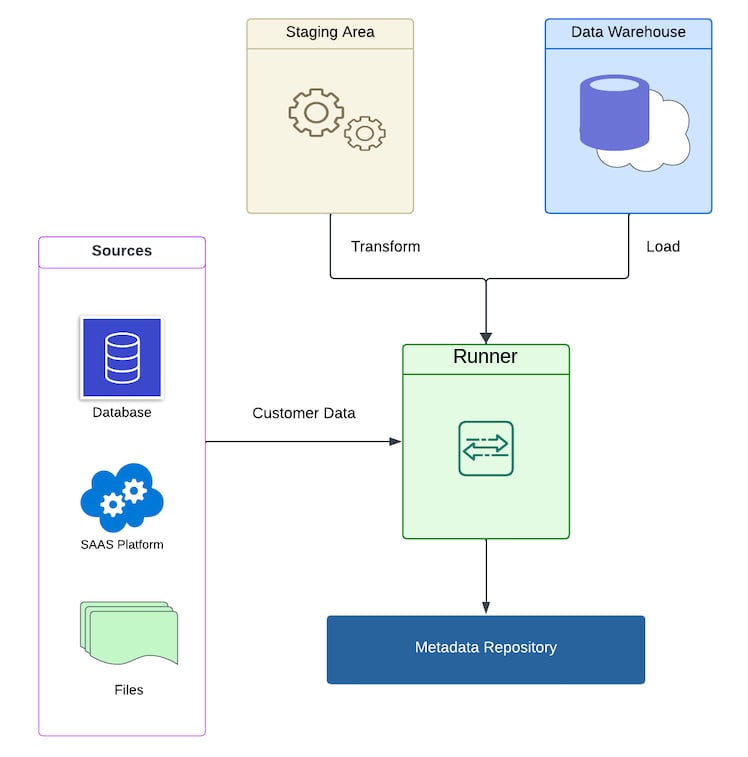
- Data originates from various sources like databases, SaaS platforms, and flat files. It first arrives at a temporary landing zone called the staging area.
- This data is then transformed using the . This transformation stage typically involves cleaning the data, ensuring consistent formatting, and even deriving new data points.
- Crucially, the metadata repository captures information about this data’s origin, any transformations applied, and its final destination. This information serves as the backbone for understanding the data’s lineage.
- Finally, the transformed data is loaded into the data warehouse, a central repository that acts as the historical data hub for the organization.
Lineage history is preserved to maintain a complete record of data activity. As a result, you may see pipelines, tables, or other objects in the lineage graph that have since been deleted. These objects remain visible so you can track past lineage. This helps maintain historical context and supports use cases such as auditing and compliance.